 English
 Русский
 Bahasa Indonesia
 Bahasa Malay
 ไทย
ไทย Español
 Deutsch
 Български
 Français
 Tiếng Việt
 中文
中文 বাংলা
বাংলা हिन्दी
 Čeština
 Українська
 Română


Analysis of Macroeconomic Reports:
There are a few macroeconomic reports scheduled for Friday, and the market is currently focused on the potential escalation of conflicts between Iran and the US, as well as the escalation of the conflict between Pakistan and Afghanistan. Therefore, economic data from Germany is unlikely to significantly impact trader sentiment. Nevertheless, unemployment, inflation, and jobless claims reports will be published in Germany today. These are interesting and important data points, but they pertain only to one country in the European Union, albeit the one with the strongest economy. In the US, the Producer Price Index will be released, which many analysts consider an important indicator influencing inflation. However, we do not share this view; in the event of a significant deviation between the actual value and the forecast, the market may react accordingly.
Analysis of Fundamental Events:
There is nothing noteworthy among the fundamental events for Friday, but the market will certainly keep a close eye on developments in Afghanistan and Iran. Recall that Pakistan began military actions in Afghanistan yesterday, and Iran may face a powerful strike from the US over this weekend, as negotiations in Geneva yielded no positive results. Thus, the current agenda is geopolitical rather than economic. In the event of intensified hostilities, new operations, and so on, the dollar may again feel support from the market.
General Conclusions:
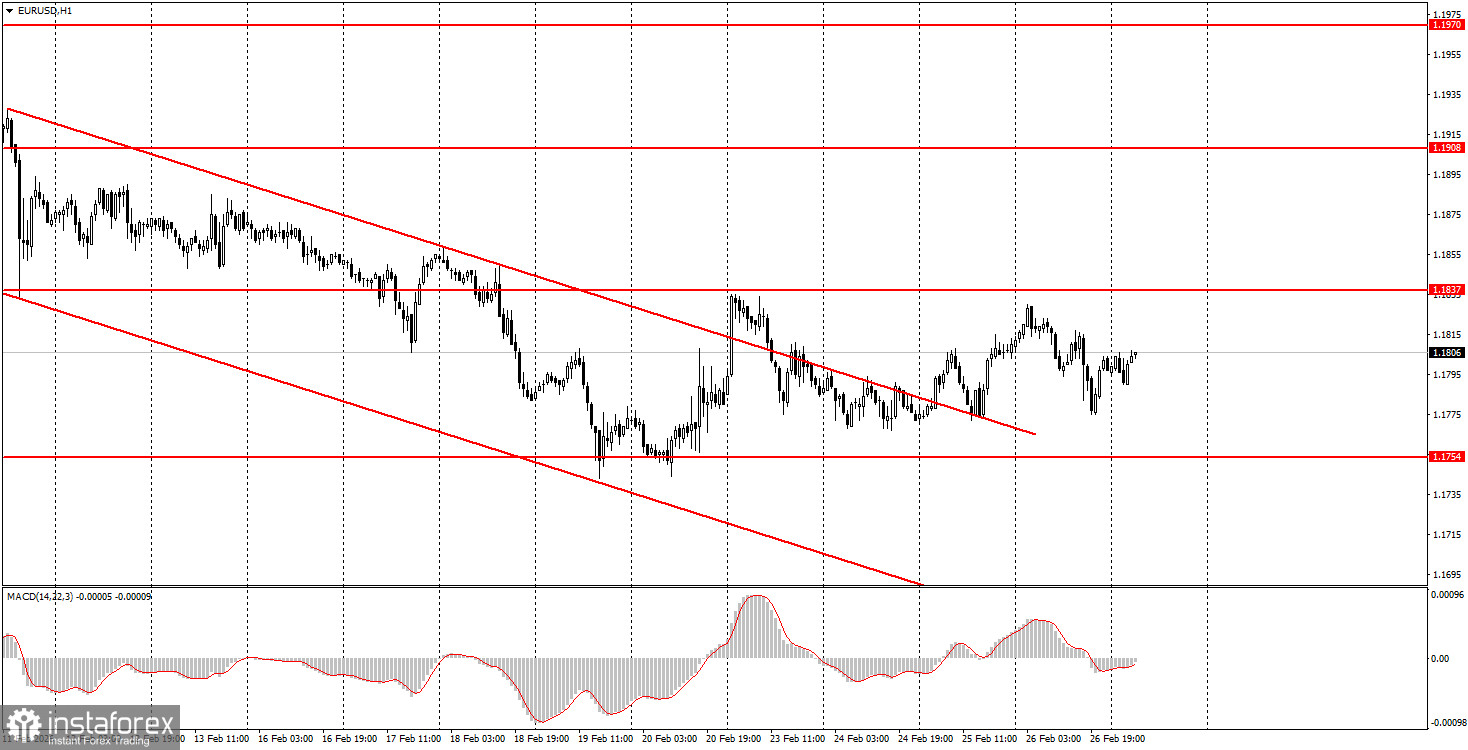
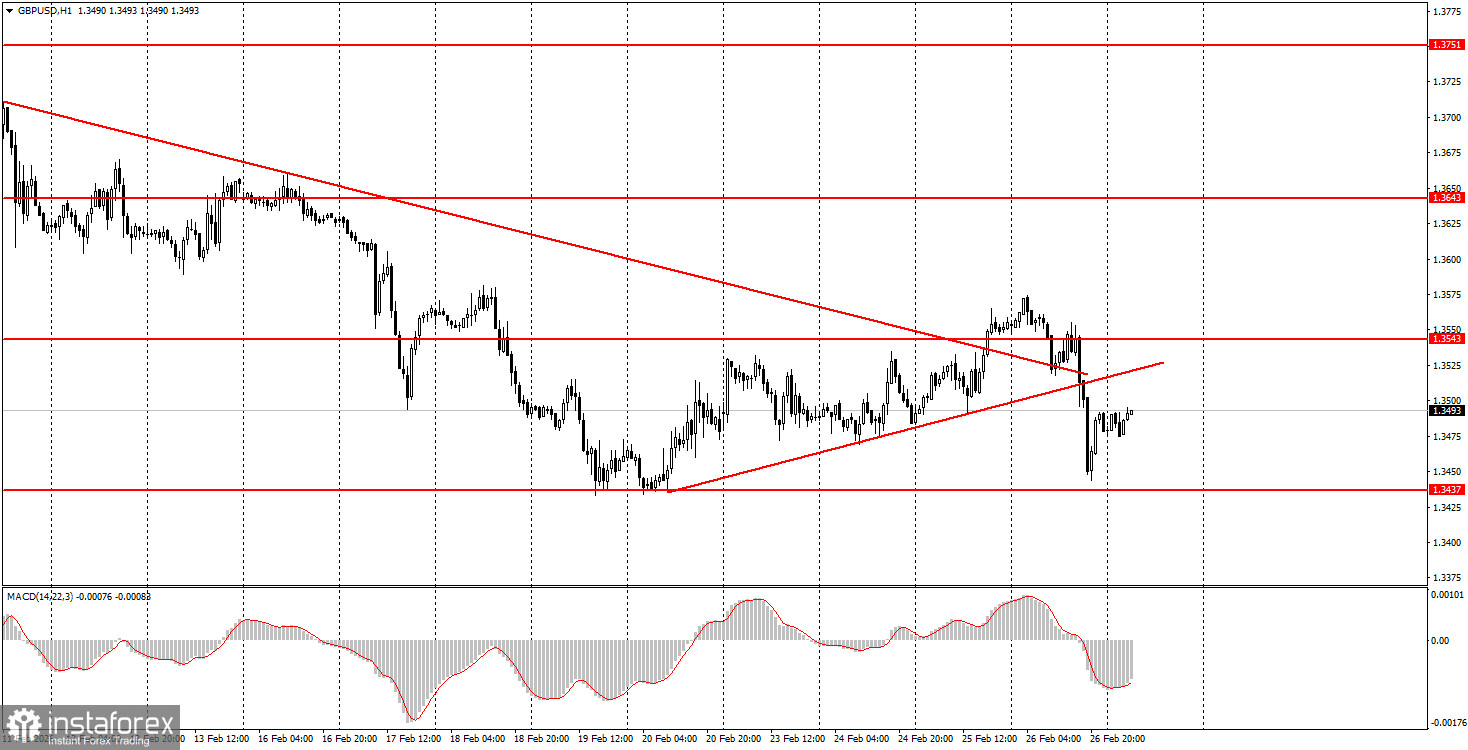
On the last trading day of the week, market movements may be relatively weak due to the few macroeconomic events. The euro can be traded today in the range of 1.1830-1.1837, and the British pound in the range of 1.3484-1.3489. We still see no basis for strong, sustained growth in the American currency, and the downward trends for both pairs have been cancelled.
Main Rules of the Trading System:
- The strength of the signal is determined by the time it takes to form (rebound or breaking through the level). The shorter the time, the stronger the signal.
- If two or more trades were opened around a particular level based on false signals, all subsequent signals from that level should be ignored.
- In a flat market, any pair can generate numerous false signals or no signals at all. In any case, it is best to stop trading at the first signs of a flat.
- Trades are opened during the time period between the start of the European session and until the middle of the American session, after which all trades should be manually closed.
- On the hourly timeframe, signals from the MACD indicator should ideally be traded only when there is good volatility and a trend confirmed by a trend line or channel.
- If two levels are too close to each other (ranging from 5 to 20 pips), they should be considered as a support or resistance area.
- After moving 15-20 pips in the correct direction, it is advisable to set the Stop Loss to break-even.
What's on the Charts:
- Support and resistance levels are targets for opening buy or sell trades. Take Profit levels can be placed around them.
- Red lines indicate channels or trend lines that reflect the current trend and indicate the preferred direction for trading now.
- The MACD indicator (14,22,3) – the histogram and signal line – serves as a supplementary indicator that can also be used as a source of signals.
- Important speeches and reports (always found in the news calendar) can significantly influence the movement of the currency pair. Therefore, during their release, trading should be conducted with maximum caution, or it is advised to exit the market to avoid a sharp price reversal against the preceding movement.
- Beginners trading in the Forex market should remember that not every trade can be profitable. Developing a clear strategy and practicing sound money management are the keys to long-term trading success.