 English
 Русский
 Bahasa Indonesia
 Bahasa Malay
 ไทย
ไทย Español
 Deutsch
 Български
 Français
 Tiếng Việt
 中文
中文 বাংলা
বাংলা हिन्दी
 Čeština
 Українська
 Română


The US dollar sharply rose amid the escalation of the geopolitical conflict. The markets reacted nervously to the news reports about the beginning of bombings in Iran by the US and Israel. The possibility of intervention by Germany and France is also not excluded. This geopolitical escalation has triggered a significant decline in the European currency and the British pound, which have come under pressure amid rising uncertainty and concerns about regional stability. Traders, seeking safety, have been switching en masse to the US dollar, leading to its noticeable strengthening. Volatility in the currency market reflects the growing anxiety among market participants. Against the backdrop of such events, traditional safe havens such as the US dollar attract greater interest. Traders are inclined to reduce riskier investments and move assets into more reliable instruments, which is currently being observed.
Another significant event of the day will be ECB President Christine Lagarde's speech. Such public statements invariably generate heightened interest, as they often hint at future monetary policy moves. We may hear comments from Lagarde regarding the airstrikes in Iran.
As for the pound, special attention should be paid to the publication of the PMI index for the UK manufacturing sector. This indicator, reflecting the state of one of the key sectors of the economy, will provide insights into current dynamics of industrial production, new orders volumes, and future forecasts. Additionally, data on the Nationwide housing price index will be presented. This indicator is among the earliest indicators of the British real estate market, reflecting the dynamics of housing prices and, consequently, consumer confidence and purchasing power. Data on the number of approved mortgage applications is also expected to be published in the first half of the day. This statistic plays a key role in assessing activity in the real estate market, as it is directly linked to the volume of lending, housing affordability, and overall confidence among potential buyers. Weak data will only increase the pressure on the GBP/USD pair.
If the data aligns with economists' expectations, it is better to act on the Mean Reversion strategy. If the data turns out to be significantly higher or lower than economists' expectations, it is best to use the Momentum strategy.
Momentum Strategy (on Breakout):
For the EUR/USD Pair
- Long positions on a breakout of the level 1.1795 may lead to an increase in the euro to the levels of 1.1824 and 1.1848;
- Short positions on a breakout of the level 1.1769 may lead to a decline in the euro to the levels of 1.1745 and 1.1719;
For the GBP/USD Pair
- Longs on a breakout of the level 1.3453 may lead to an increase in the pound to the levels of 1.3488 and 1.3521;
- Shorts on a breakout of the level 1.3416 may lead to a decline in the pound to the levels of 1.3384 and 1.3361;
For the USD/JPY Pair
- Longs on a breakout of the level 156.73 may lead to an increase in the dollar to the levels of 157.05 and 157.40;
- Shorts on a breakout of the level 156.33 may lead to a decline in the dollar to the levels of 155.96 and 155.56;
Mean Reversion Strategy (on Return):
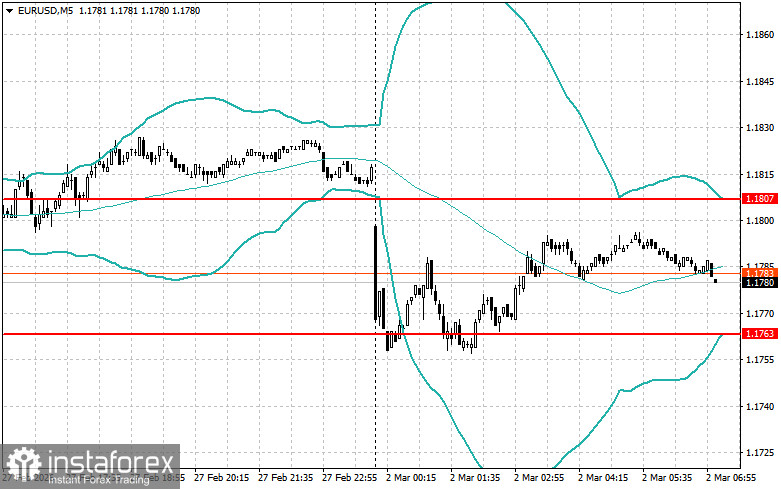
For the EUR/USD Pair
- Shorts will be sought after a failed breakout above 1.1807 and a return below this level;
- Longs will be sought after a failed breakout below 1.1763 and a return to this level;
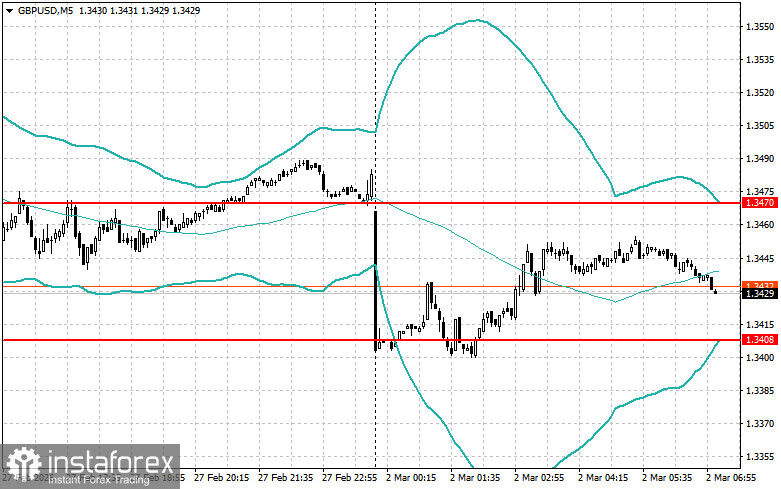
For the GBP/USD Pair
- Shorts will be sought after a failed breakout above 1.3470 and a return below this level;
- Longs will be sought after a failed breakout below 1.3408 and a return to this level;
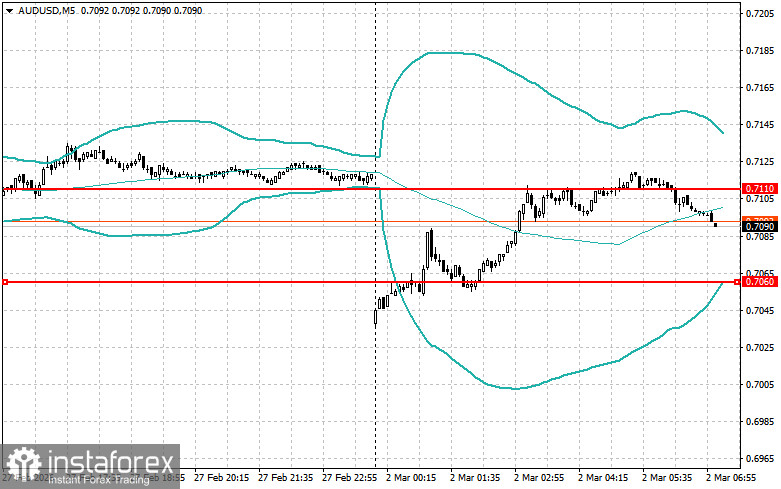
For the AUD/USD Pair
- Shorts will be sought after a failed breakout above 0.7110 and a return below this level;
- Longs will be sought after a failed breakout below 0.7060 and a return to this level;
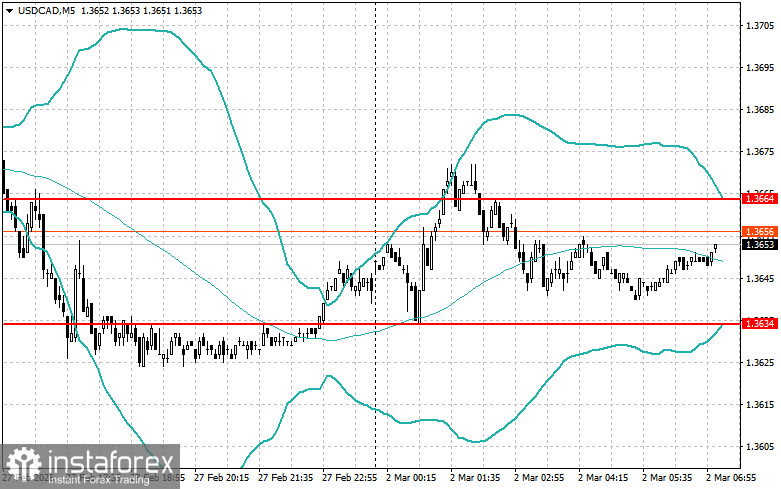
For the USD/CAD Pair
- Shorts will be sought after a failed breakout above 1.3664 and a return below this level;
- Longs will be sought after a failed breakout below 1.3634 and a return to this level.