 English
 Русский
 Bahasa Indonesia
 Bahasa Malay
 ไทย
ไทย Español
 Deutsch
 Български
 Français
 Tiếng Việt
 中文
中文 বাংলা
বাংলা हिन्दी
 Čeština
 Українська
 Română


The euro/dollar pair continues to sit in a zone of price turbulence, reacting impulsively to conflicting fundamental signals. Yesterday's low was recorded at 1.1485 and the high at 1.1640. Market participants are clearly confused and disoriented by the situation when de-escalation and escalation signals are coming simultaneously from both sides of the Atlantic.
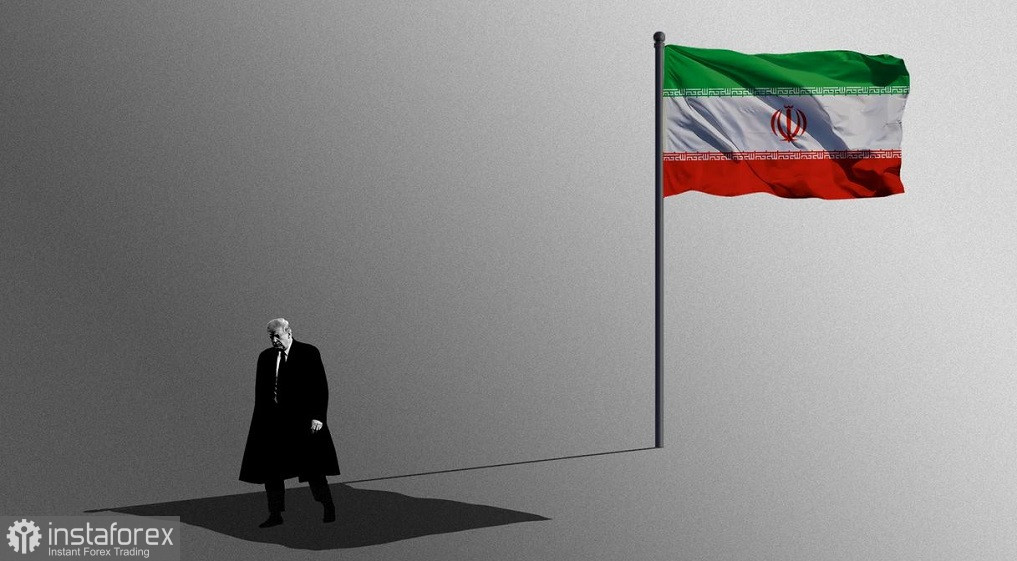
Donald Trump shocked markets yesterday by saying that Washington is holding productive talks with Tehran, which allowed him to extend the ultimatum by five days. As is known, over the weekend, the US president had threatened Iran with the destruction of energy infrastructure if the Strait of Hormuz was not unblocked within 48 hours. The five-day reprieve inspired traders — interest in risk assets rose, and EUR/USD refreshed a two-week price high.
However, subsequent comments from Tehran were a cold shower for traders. Iran denied Trump's claims of contacts with the US, calling his statement an attempt to manipulate financial markets. In turn, the Islamic Revolutionary Guard Corps labelled the White House chief's words a psychological operation.
The situation raises more questions than answers. Therefore, most traders have taken a wait-and-see stance, judging by EUR/USD's behavior. The upside impulse has faded, yet sellers are in no hurry to open large positions in favor of the greenback. At the moment, the pair is experiencing a downside retracement, but without tumbling into the 1.14 area.
Why does cautious optimism among traders persist?
In my view, the market is now clinging even to the slightest hints of peace talks, ignoring Tehran's hawkish rhetoric. Significant weight is given to numerous hopeful insider reports, despite their lack of confirmation. It seems that under current conditions, many traders are willing to be deceived, nurturing illusions of a near-term end to the Middle East conflict.
Nevertheless, some media scoops do carry genuinely encouraging signals. For example, several Al Jazeera sources report that unofficial diplomatic contacts between US and Iranian representatives are nevertheless ongoing—via Qatari and Omani intermediaries. Diplomatic sources cited by The Wall Street Journal specify that technical mid-level delegations from both sides are in Muscat. They are discussing the possibility of freezing current positions: Iran would open the Strait of Hormuz to civilian shipping, and the US would halt strikes on Iranian facilities.
Meanwhile, influential Pakistani media reports preparations for a higher-level meeting. According to their information, there is a non-zero probability of a meeting between representatives of the US State Department and Iranian leadership in Islamabad as early as the end of this week. Pakistan would act as a security guarantor for the Iranian delegation.
Financial Times, on its part, reports active involvement by Beijing as a shadow intermediary. According to the paper's insiders, China is exerting pressure on Tehran to take de-escalatory steps because a closed strait effectively hurts the Chinese economy.
In other words, certain signs of diplomatic contacts are indeed visible—as the saying goes, there is no smoke without fire. Such (unofficial) signals provide background support to EUR/USD buyers, preventing the pair from tumbling into the 1.14 area.
However, alongside encouraging insider reports, there are opposite signals that restrain the rise of risk assets.
Thus, The Wall Street Journal reports that Saudi Arabia and the UAE are considering entering a war against Iran. Sources told the paper that the monarchies initially hoped to remain neutral in the conflict, but their stance has shifted amid attacks on energy infrastructure. In particular, the UAE has begun closing Iran-linked institutions and is considering freezing Iranian assets. Saudi Arabia, in turn, has granted the US access to King Fahd Air Base. Moreover, according to WSJ sources, Crown Prince Mohammed bin Salman is now close to deciding to join offensive operations.
Regarding possible negotiations, things are not smooth there either. According to several media outlets and analytical centers (notably Axios and ISW), there is no unity on the matter inside Iran itself. It is asserted that representatives of the pragmatic wing, including senior Foreign Ministry officials, are willing to discuss a deal with the US, while the IRGC leadership insists on continuing the conflict and resolving it solely on Iranian terms.
Thus, the situation remains suspended. Hopeful insider reports provide background support to EUR/USD buyers, but persistent risks of further escalation (involving the UAE and Saudi Arabia) limit the pair's upside potential.
Given the current fundamental backdrop for EUR/USD, it is sensible to adopt a wait-and-see position, because the scales could tip either toward de-escalation or toward further deterioration (and escalation) of the conflict.