 English
 Русский
 Bahasa Indonesia
 Bahasa Malay
 ไทย
ไทย Español
 Deutsch
 Български
 Français
 Tiếng Việt
 中文
中文 বাংলা
বাংলা हिन्दी
 Čeština
 Українська
 Română


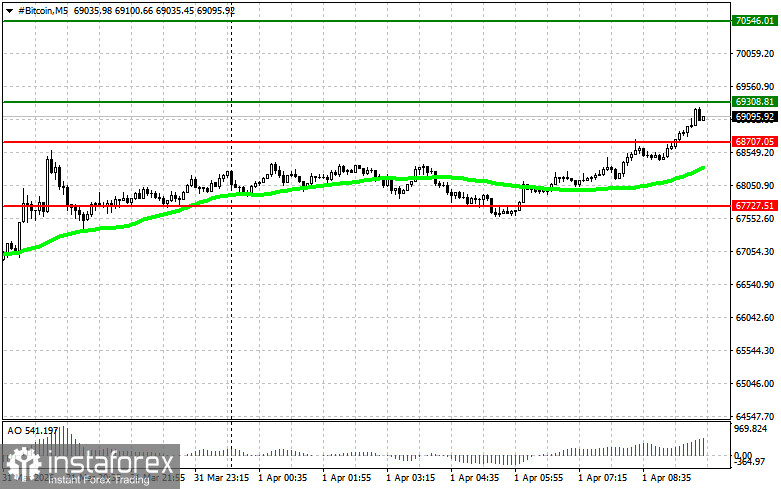
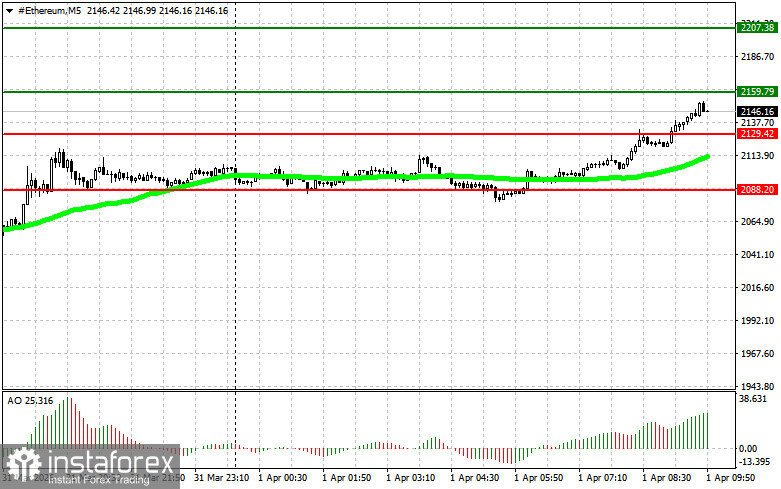
Bitcoin is trading at $69,000, having recovered well after Trump's statements about ending the war with Iran, which we have been hearing more frequently lately. Following these manipulations, Ethereum has reached $2,150.

Meanwhile, the fundamental factors determining Bitcoin's price dynamics do not currently support its growth. The optimistic scenario for BTC price recovery largely depends on a possible reduction in the US Federal Reserve's interest rates and subsequent increases in liquidity in the financial markets. As long as the Fed rate remains high and monetary policy remains restrictive, capital is likely to gravitate toward more predictable, less risky instruments.
A telling indicator of this trend is the recent rise in yields on 10-year US Treasury bonds above 2%. This makes government bonds, considered one of the safest assets, more attractive to investors. In turn, the rise in bond yields leads to capital outflows from risky assets, including Bitcoin, which has zero yield in the traditional sense.
Another factor undermining BTC's prospects is the noticeable weakening of demand for it. Recent data indicates a return to selling from institutional investors and major cryptocurrency holders. This is confirmed by the statistics: the ratio of demand for new coins to their supply has decreased from 5.3x at the end of February to 1.3x today. This decline indicates that interest in acquiring new Bitcoins has significantly diminished, while the volume of available coins remains unchanged or even increases, creating an oversupply and exerting pressure on the price.
Regarding the intraday strategy for the cryptocurrency market, I will continue to rely on significant dips in Bitcoin and Ethereum, anticipating the continuation of the long-term bullish market, which has not disappeared.
For short-term trading, the strategies and conditions are outlined below.
Bitcoin
Buy Scenario
- Scenario #1: I will buy Bitcoin today when it reaches the entry point around $69,300, with a target of growth to $70,500. At around $70,500, I plan to exit the purchases and immediately sell back on a rebound. Before buying on a breakout, ensure that the 50-day moving average is below the current price and the Awesome Indicator is above zero.
- Scenario #2: I can buy Bitcoin from the lower boundary of $68,700 if there is no market reaction to its breakout in the opposite direction towards the levels of $69,300 and $70,500.
Sell Scenario
- Scenario #1: I will sell Bitcoin today when it reaches the entry point around $68,700, with a target for a decline to $67,700. At around $67,700, I will exit the sales and immediately buy back on a rebound. Before selling on a breakout, ensure that the 50-day moving average is above the current price and the Awesome Indicator is below zero.
- Scenario #2: I can sell Bitcoin from the upper boundary of $69,300 if there is no market reaction to its breakout in the opposite direction towards the levels of $68,700 and $67,700.
Ethereum
Buy Scenario
- Scenario #1: I will buy Ethereum today when it reaches the entry point around $2,159, with a target of growth to $2,207. At around $2,207, I plan to exit the purchases and immediately sell back on a rebound. Before buying on a breakout, ensure that the 50-day moving average is below the current price and the Awesome Indicator is above zero.
- Scenario #2: I can buy Ethereum from the lower boundary of $2,129 if there is no market reaction to its breakout in the opposite direction towards the levels of $2,159 and $2,207.
Sell Scenario
- Scenario #1: I will sell Ethereum today when it reaches the entry point around $2,129, with a target for a decline to $2,088. At around $2,088, I will exit the sales and immediately buy back on a rebound. Before selling on a breakout, ensure that the 50-day moving average is above the current price and the Awesome Indicator is below zero.
- Scenario #2: I can sell Ethereum from the upper boundary of $2,159 if there is no market reaction to its breakout in the opposite direction towards the levels of $2,129 and $2,088.