 English
 Русский
 Bahasa Indonesia
 Bahasa Malay
 ไทย
ไทย Español
 Deutsch
 Български
 Français
 Tiếng Việt
 中文
中文 বাংলা
বাংলা हिन्दी
 Čeština
 Українська
 Română


Oil has been rising for seven of the last eight trading days, inflation in Germany is not accelerating in April as Bloomberg experts had hoped, and European economic confidence has fallen for the third consecutive month. It would seem that there's plenty of reason to send EUR/USD into a deep knockout. But instead of falling, the main currency pair continues to stand firm. Why?
Perhaps it is due to the divergence in monetary policies? The futures market does not anticipate any changes in the federal funds rate from the Federal Reserve in 2026, while the European Central Bank is eager to see deposit rate hikes in two Governing Council meetings, with some probability for a third. Nevertheless, the European Central Bank is in no rush until June. As Chief Economist Philip Lane aptly stated, despite a plethora of data, most officials have no idea what will happen in the Middle East and the global economy at the beginning of summer.
Dynamics of German Inflation
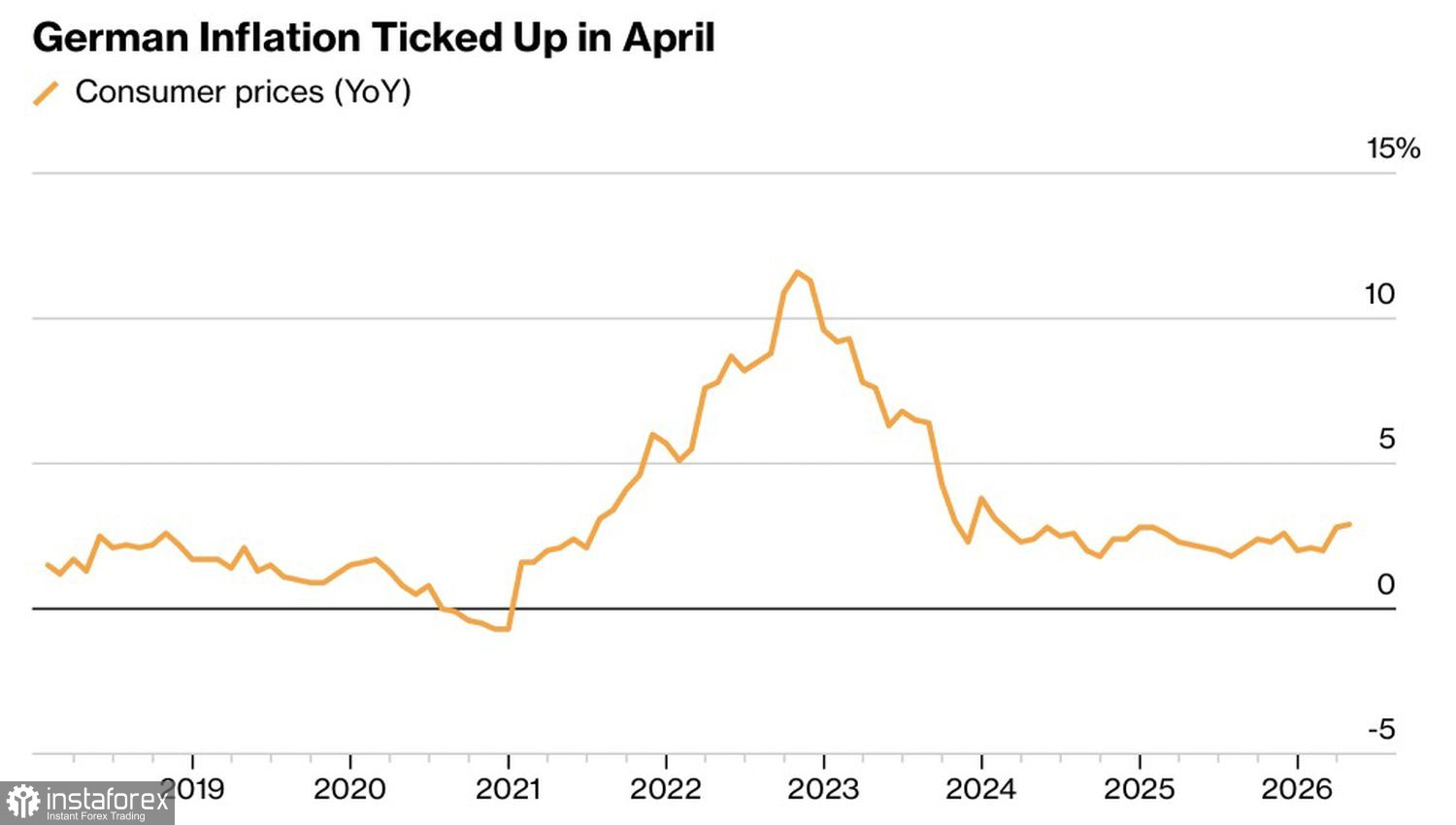
Markets constantly surprise. For example, consumer prices in Germany rose in April from 2.8% to 2.9%, although Bloomberg experts were expecting a jump to 3%. In contrast, Spanish CPI accelerated to 3.5%, although core inflation decreased to 2.8%.
Such dynamics in indicators and data on business activity and economic confidence demonstrate that stagflation—a combination of sluggish GDP growth and rising consumer prices—is approaching the Eurozone. The ECB must be extremely cautious when making important decisions. Investors understand this and are in no rush to buy the euro, especially since the European Commission asserts that the negative consequences of the conflict in the Middle East will be felt by the EU for a long time.
The situation is different in the United States, where GDP is poised to accelerate from 0.5% to 2.1% in the first quarter, and stock indices are breaking records amidst American exceptionalism. Under such conditions, the dollar should continue to rise. However, in reality, it is stuck in place. Perhaps investors have decided to wait for the FOMC meeting results in April. Alongside signals about future rates, they are also concerned about whether Powell will remain on the Open Market Committee.
This meeting of the Fed will be his last as chairman. He was appointed during Donald Trump's first presidential term and has faced considerable criticism from the White House. Mr. Always Late and America's Number One Enemy. Powell has held various titles. But he has done his job well. And he has preserved the Fed's independence. What will his successor—Kevin Warsh—be known for?
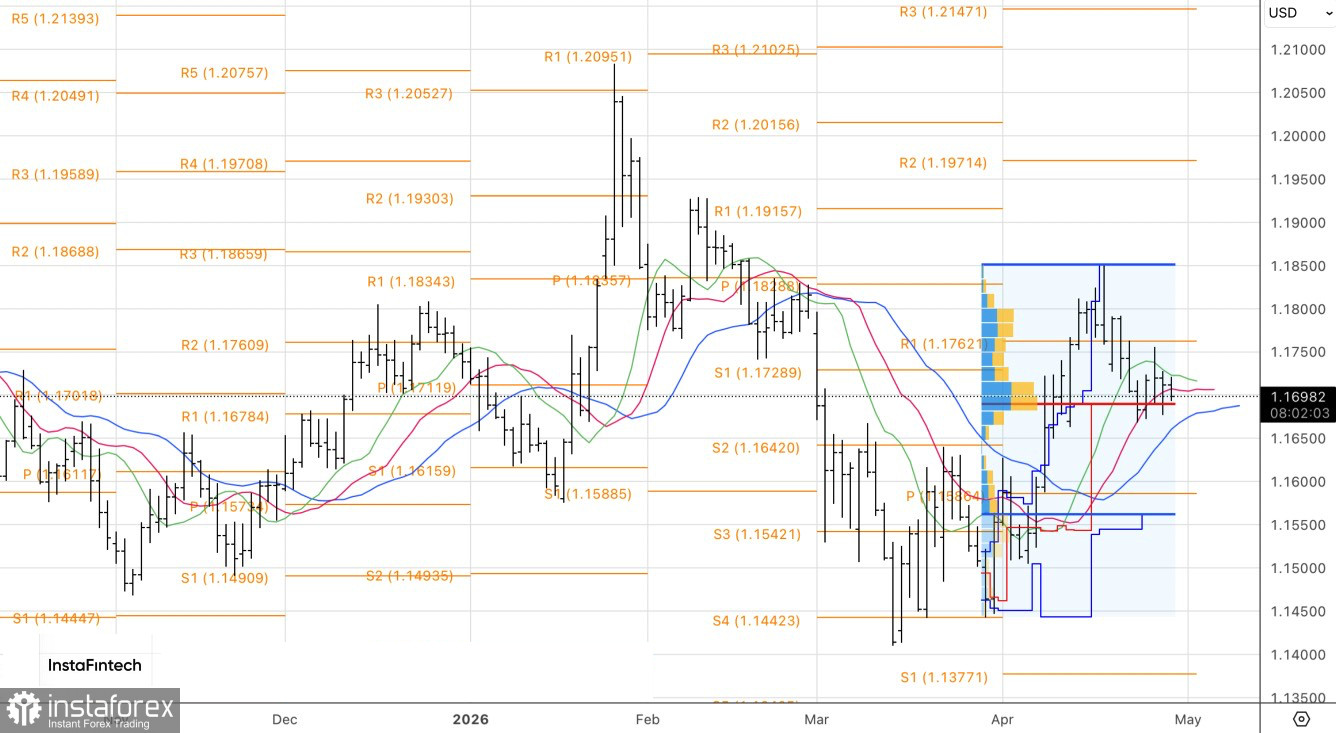
Technically, on the daily chart, EUR/USD is experiencing another assault on fair value at 1.169 by the "bears." If sellers of the main currency pair manage to consolidate below this mark, the risks of continued descent towards 1.164 and 1.156 will increase. Isn't this a reason to sell euros against the U.S. dollar?