 English
 Русский
 Bahasa Indonesia
 Bahasa Malay
 ไทย
ไทย Español
 Deutsch
 Български
 Français
 Tiếng Việt
 中文
中文 বাংলা
বাংলা हिन्दी
 Čeština
 Українська
 Română


With attention focused on the Middle East, the stalled US-EU trade agreement has again faded from view, and yesterday talks between the European Parliament and EU member states on implementing the transatlantic trade pact ended without a breakthrough, despite US President Donald Trump's warnings of imminent higher tariffs on European cars.
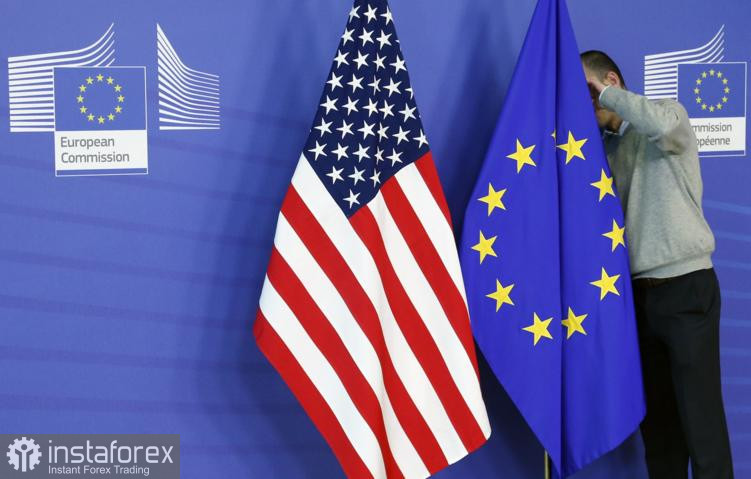
The meeting, which lasted around six hours, discussed amendments to the agreement originally struck last July at the Turnberry summit in Scotland. According to Cyprus, which currently holds the EU Council presidency, final decisions on the key provisions were not taken.
The European Parliament's chief negotiator, Bernd Lange, described the round as constructive, noting progress on safeguard mechanisms and review procedures, but he added that there is still work to do. The next round of talks is scheduled for May 19 in Strasbourg.
As noted above, the Trump administration is again pressing Brussels for rapid ratification of the deal. Last week the US president threatened to raise tariffs on cars and trucks from the EU from the current 15% to 25%, accusing the Europeans of moving too slowly to implement agreed measures.
US Ambassador to the EU Andrew Puzder warned that Europe should expect tariff increases in the relatively near term if no meaningful progress is made this week. Puzder said that they had time to fix the issue and that the time to do so was now, and that if they did, the US would reconsider its decision.
The causes of the disagreement remain largely the same. European lawmakers insist on including additional safeguards in the agreement, which they argue are necessary to protect EU interests given the unpredictability of US trade policy. Proposals under debate include a suspension mechanism if the US fails to meet its commitments, conditional tariff rollbacks that would be implemented only after reciprocal US actions, and an automatic expiry of the agreement on March 31, 2028, unless renewed.
Some EU governments, notably Germany and countries in the Baltics, Greece, Ireland, and Sweden, favor retaining the original version of the pact, fearing that tougher conditions could provoke a trade war with Washington.
Despite the lack of a breakthrough, officials expressed determination to continue working. In a statement, Cyprus Energy Minister Michael Damianou stressed that parties are resolved to act swiftly. The coming days will show whether Europe can forge a consolidated position and offer Washington compromise wording acceptable both to EU lawmakers and to the US administration. If not, the threat of higher tariffs on European autos will become a matter of time.
Technical picture, EUR/USD
Regarding the current technical picture for EUR/USD, buyers should consider how to take the 1.1760 level. Only this will allow a test of 1.1795. From there, a move to 1.1825 would be possible, but achieving that without support from major players will be rather difficult. The most distant target is the high at 1.1850. In the event of a decline only to around 1.1725, I expect serious action from large buyers. If there is nobody there, it would be prudent to wait for a refresh of the low at 1.1700, or to open long positions from 1.1675.
Technical picture, GBP/USD
As for the current technical picture for GBP/USD, pound buyers need to take the nearest resistance at 1.3615. Only this will allow a target of 1.3655, above which breaking through will be rather difficult. The most distant target is the 1.3685 area. In the event of a fall, bears will try to seize control at 1.3580. If they succeed, a break of the range will deliver a serious blow to bulls' positions and push GBP/USD toward the low at 1.3550, with the prospect of reaching 1.3515.