 English
 Русский
 Bahasa Indonesia
 Bahasa Malay
 ไทย
ไทย Español
 Deutsch
 Български
 Français
 Tiếng Việt
 中文
中文 বাংলা
বাংলা हिन्दी
 Čeština
 Українська
 Română


I think few expected strong dollar moves last Friday.
Due to the Independence Day holiday in the U.S., trading activity in the currency market was notably reduced. On Friday, the day before the holiday, volatility remained at a relatively low level, resulting in a lack of pronounced price movements across most major currency pairs, including the U.S. dollar. However, this period of calm does not imply a complete absence of fundamental factors affecting the markets. Economic data releases, statements from central bank representatives, and geopolitical news will continue to flow this week, forming the basis for potential reversals and trends.
Today's trading session promises to be rich in economic data that may significantly impact currency pair dynamics. In the first half of the day, market participants will be focused on key indicators from the Eurozone. Among these are data on changes in industrial orders in Germany, an important indicator of manufacturing activity and potential economic growth. This will be followed by the publication of the Eurozone producer price index, which can provide insight into inflationary pressures in the production sector. The block of important data will conclude with the Eurozone retail sales report, reflecting consumer activity and, accordingly, the state of demand.
If today's published data exceeds analysts' forecasts, it could serve as a significant catalyst for the euro's strengthening.
As for the pound, there are no reports scheduled for the UK during the European session today, which means that pressure on the GBP/USD pair may persist. The lack of fresh macroeconomic data means that traders will have to rely on technical factors and overall market sentiment. The British pound, which has already shown some weakness recently, may continue to lose ground amid uncertainty and low liquidity typical of days without significant news.
If the data meets economists' expectations, it is best to act based on the Mean Reversion strategy. If the data comes in significantly higher or lower than economists' expectations, the Momentum strategy would be most appropriate.
Momentum Strategy (for Breakouts):
For the EUR/USD pair:
- Buy on a breakout of the level 1.1445, which could lead to a rise in the euro towards 1.1486 and 1.1527.
- Sell on a breakout of the level 1.1422, which could lead to a drop in the euro towards 1.1398 and 1.1365.
For the GBP/USD pair:
- Buy on a breakout of the level 1.3354, which could lead to a rise in the pound towards 1.3380 and 1.3416.
- Sell on a breakout of the level 1.3335, which could lead to a drop in the pound towards 1.3298 and 1.3267.
For the USD/JPY pair:
- Buy on a breakout of the level 162.33, which could lead to a rise in the dollar towards 162.56 and 162.83.
- Sell on a breakout of the level 162.05, which could lead to dollar sell-offs towards 161.85 and 161.58.
Mean Reversion Strategy (for Retracements):
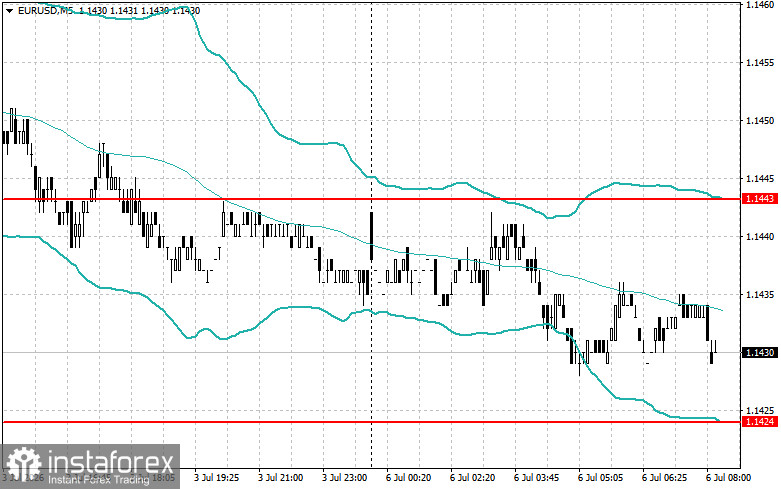
For the EUR/USD pair:
- Look for short positions after a failed breakout above 1.1443 on a return below this level.
- Look for long positions after a failed breakout below 1.1424 on a return to this level.
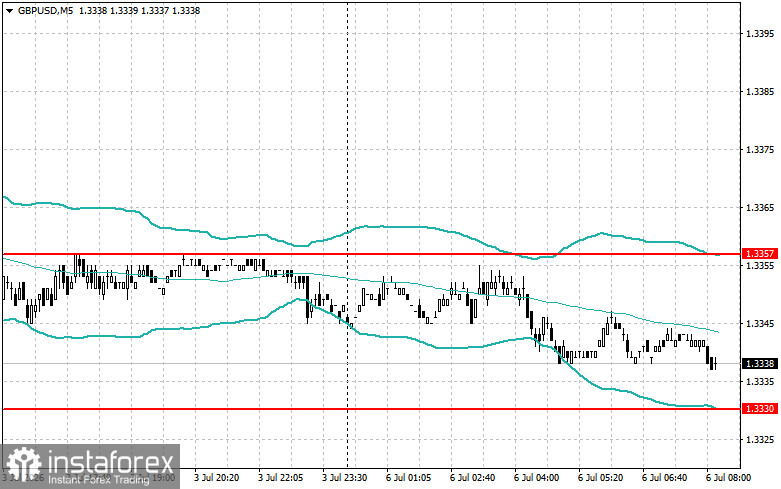
For the GBP/USD pair:
- Look for shorts after a failed breakout above 1.3357 on a return below this level.
- Look for longs after a failed breakout below 1.3330 on a return to this level.
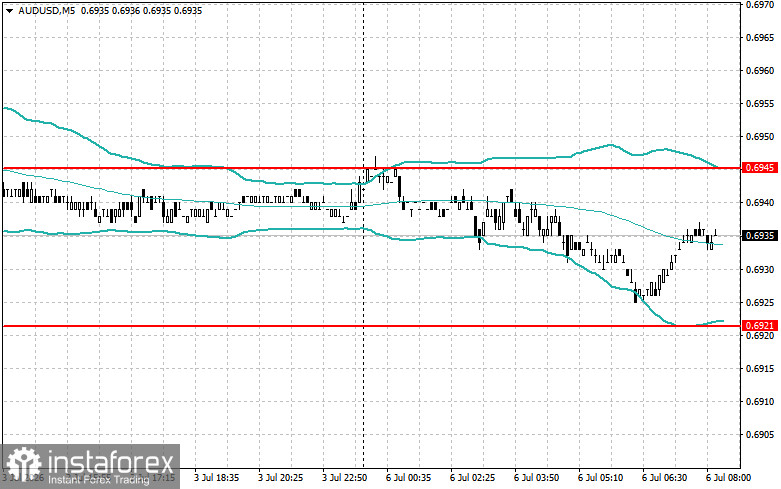
For the AUD/USD pair:
- Look for shorts after a failed breakout above 0.6945 on a return below this level.
- Look for longs after a failed breakout below 0.6921 on a return to this level.
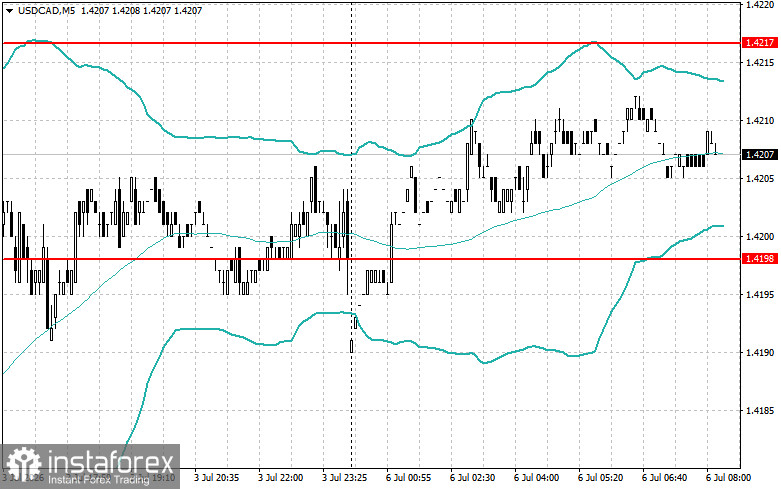
For the USD/CAD pair:
- Look for shorts after a failed breakout above 1.4217 on a return below this level.
- Look for longs after a failed breakout below 1.4198 on a return to this level.