 English
 Русский
 Bahasa Indonesia
 Bahasa Malay
 ไทย
ไทย Español
 Deutsch
 Български
 Français
 Tiếng Việt
 中文
中文 বাংলা
বাংলা हिन्दी
 Čeština
 Українська
 Română


"Trust, but verify" goes the old market wisdom. Investors in bonds and currencies are doing just that, recalling last year's "Sell America" trade after a series of political decisions from Washington. The US dollar is tired of making excuses, and the euro is getting a chance to capitalize on others' uncertainty.
First, Kevin Warsh's preference for scant communication raises questions about the central bank's commitment to fighting inflation. The Wall Street Journal reports that Donald Trump regularly communicates with the new Federal Reserve Chair, although formally, rate topics are avoided in these conversations. Second, Treasury Secretary Scott Bessent helped Japan support the yen by purchasing euros – the first coordinated intervention in nearly 30 years. Formally, the blow is aimed away from the dollar, but in reality it affects the dollar.
The yield on 30-year Treasuries rose above 5% – a high since 2007, although part of the movement was later retraced. However, the greenback weakened against almost all G10 currencies over the month, even though higher yields typically should support it rather than undermine it. "Bessent and Warsh represent a double blow to global markets that investors cannot ignore," says Gama Asset Management, reducing positions in the US dollar.
Dynamics of the USD Index and Treasury Yields
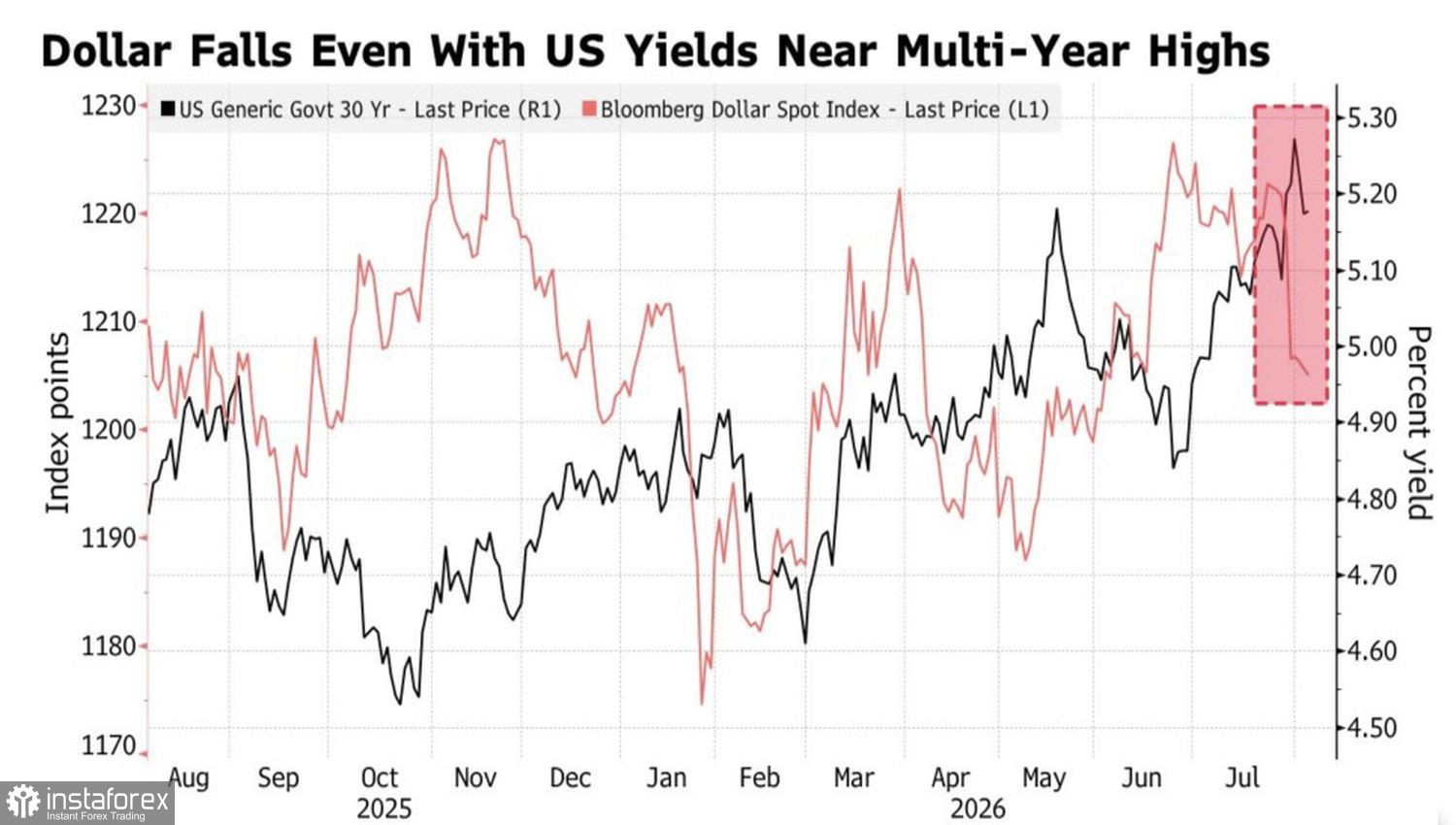
Against this backdrop, EUR/USD gains room to maneuver. However, the picture is not as straightforward as in April of last year, when Trump's tariff statements triggered a simultaneous sell-off of stocks, bonds, and the dollar. Currently, US stocks are holding strong, the S&P 500 is near record levels, and foreign investors have increased their holdings in Treasuries to $9.4 trillion – 4% more than a year ago. Washington clearly has not entirely lost trust.
At the same time, Standard Chartered expects the USD index to fall by 3-4% over the year, citing the uncertainty of the administration's actions and a gradual erosion of the structural strength of US capital markets. This contradicts the "hawks" of the Fed: Neel Kashkari is ready to "slowly raise" rates, Mary Daly warns about the risks of persistent inflation, and Lisa Cook does not rule out tightening monetary policy if inflation does not slow down. This creates a strange mix – the rhetoric is tough, while the dollar is weak. The divergence between officials' words and market behavior stands out.
Thus, the euro is not so much winning on its own but is benefiting from others' confusion in signals. All the dots will be connected by the July US employment report. Will the market figure out whom to trust – Warsh or the veteran FOMC officials? I doubt the answer will be unequivocal.
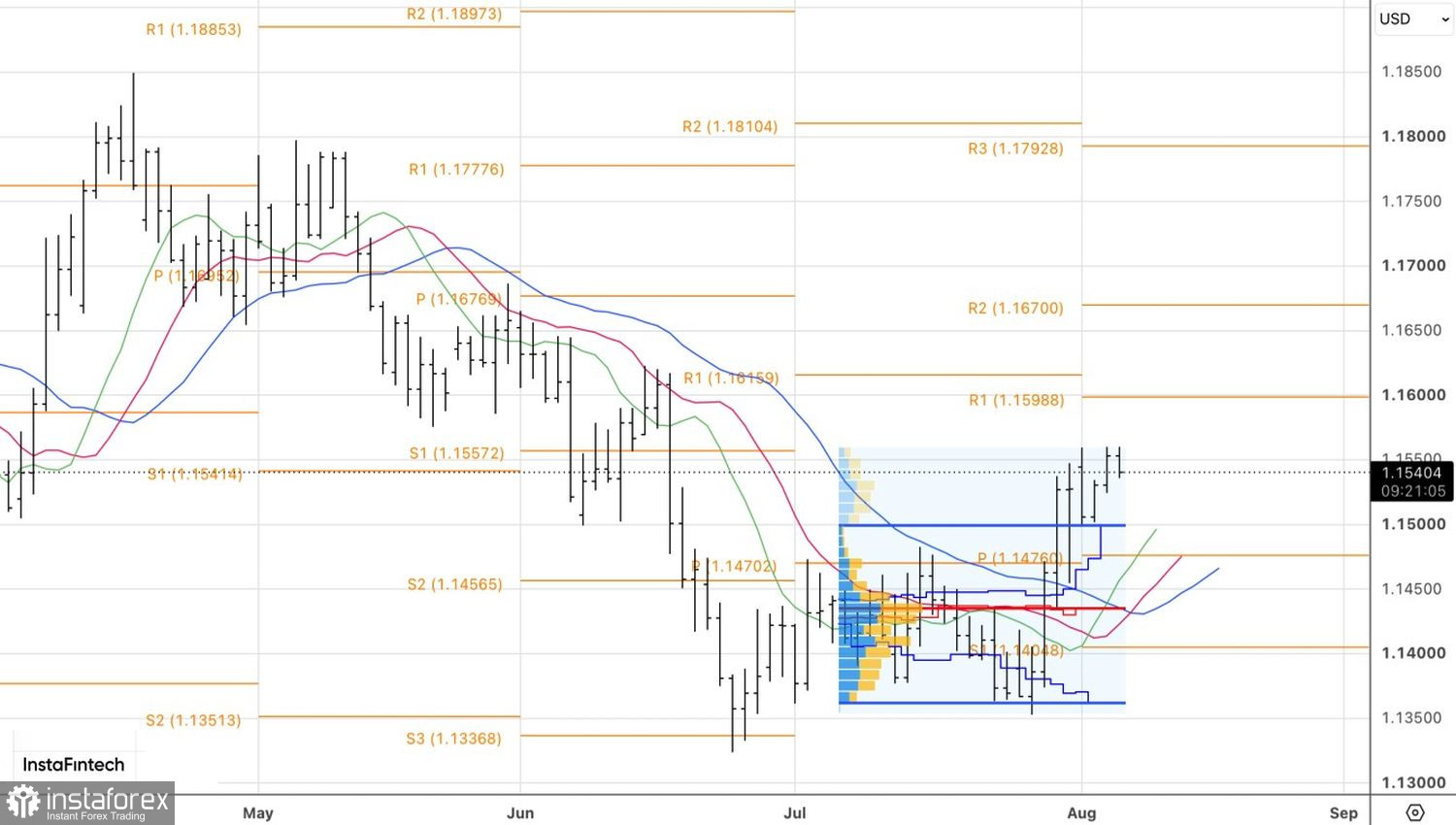
Technically, on the daily chart, EUR/USD quotes are at the upper boundary of the consolidation range of 1.150–1.156. If this is broken, the risks of a continuation of the rally will increase, providing grounds for buying. However, a return to the trading channel provides a reason for selling.