 English
 Русский
 Bahasa Indonesia
 Bahasa Malay
 ไทย
ไทย Español
 Deutsch
 Български
 Français
 Tiếng Việt
 中文
中文 বাংলা
বাংলা हिन्दी
 Čeština
 Українська
 Română


The euro, pound, and other risky assets managed to hold their positions against the U.S. dollar yesterday, which may allow for the continuation of a bullish market.
Yesterday afternoon, the dollar did not gain an advantage from the data, as the U.S. economy finally showcased a two-speed situation in July. Industrial production increased by a modest 0.2% month-on-month and 1.1% year-on-year. Consumer goods production, however, fell by 1.8%. Industrial production reflects the state of the real sector, and this divergence did not provide a clear signal for the dollar, as strength in the corporate segment was offset by weakness in consumer goods. A more pronounced contradiction appeared in housing construction. Building permits rose by 5.0% to 1.44 million, but actual housing starts plummeted by 12.4% to 1.24 million. Builders are obtaining permits in advance but are not rushing to start work, which is logical given the NAHB sentiment index is stuck at 35, and buyer flow is at 23. For the Federal Reserve, the outcome is ambiguous, as corporate investments are accelerating while everything tied to consumer spending and credit costs continues to cool.
For the euro and pound, the lack of advantage for the dollar became a support factor. The mixed nature of the data did not provide the American currency with any reason to strengthen, and both European currencies held their positions.
Today, attention for the euro will focus on a significant block of European data, with the key report being the Eurozone consumer price index. The CPI reflects the pace of inflation and directly influences expectations for the European Central Bank's policy, as the stronger the price pressure, the more compelling the arguments for a hawkish stance from the central bank. This agenda will also include the current account of the balance of payments, which reflects capital and goods inflows and outflows, as well as a speech by ECB President Christine Lagarde, whose comments will be analyzed by the market for rate sentiment.
Inflation will be the main driver for the euro. Strong data confirming price stability will lead to a new wave of growth for the euro, as it will strengthen market belief in a hawkish stance from the ECB and support the EUR/USD pair. Weak figures, on the other hand, will dampen this sentiment, while Lagarde's tone could either strengthen or soften the response.
As for the pound, traders also await an important block of inflation data today, including the UK consumer price index, core index, and retail price index. The core measure, excluding volatile items, more accurately reflects persistent price pressure, while the retail price index serves as an additional inflation indicator. All three metrics directly influence expectations for the Bank of England's interest rate, as price dynamics determine whether the central bank will tighten policy or act cautiously.
The situation is complicated by the fact that high inflation is becoming yet another problem for the BoE. The central bank must balance between a weakening labor market, which favors a pause, and rising prices, which require firmness. For the pound, strong inflation data could provide support, bolstering arguments for maintaining a hawkish stance and helping the GBP/USD pair. Conversely, weak figures would push the balance toward easing and weaken the British currency, leading to a noticeable increase in volatility after the publication.
If the data aligns with economists' expectations, it is better to act based on the Mean Reversion strategy. If the data is significantly above or below economists' expectations, it is best to use the Momentum strategy.
Momentum Strategy (Breakout):
For EUR/USD
- Buy on a breakout at 1.1598, which may lead to a rise in the euro to around 1.1613 and 1.1645.
- Sell on a breakout at 1.1575, which may lead to a decline in the euro to around 1.1541 and 1.1514.
For GBP/USD
- Buy on a breakout at 1.3552, which may lead to a rise in the pound to around 1.3569 and 1.3588.
- Sell on a breakout at 1.3527, which may lead to a decline in the pound to around 1.3501 and 1.3475.
For USD/JPY
- Buy on a breakout at 159.40, which may trigger a rise in the dollar toward 159.60 and 159.85.
- Sell on a breakout at 159.10, which may lead to a dollar sell-off down to around 158.80 and 158.55.
Mean Reversion Strategy (Return):
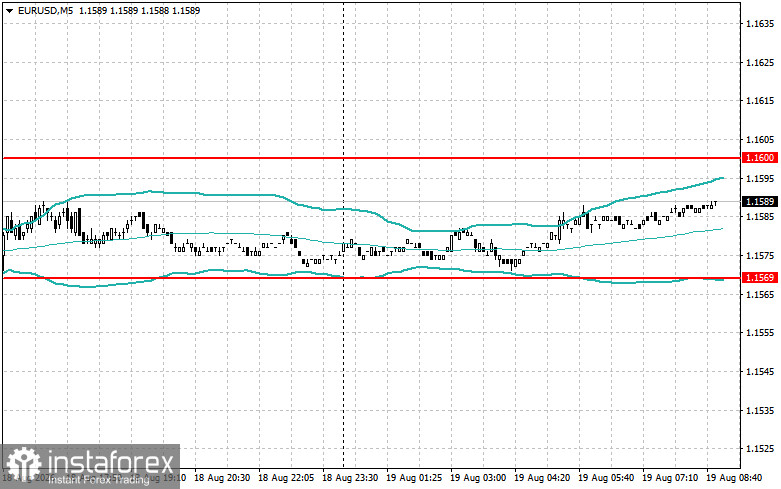
For EUR/USD
- Look for short positions after a failed breakout above 1.1600, returning below this level.
- Look for long positions after a failed breakout below 1.1569, returning to this level.
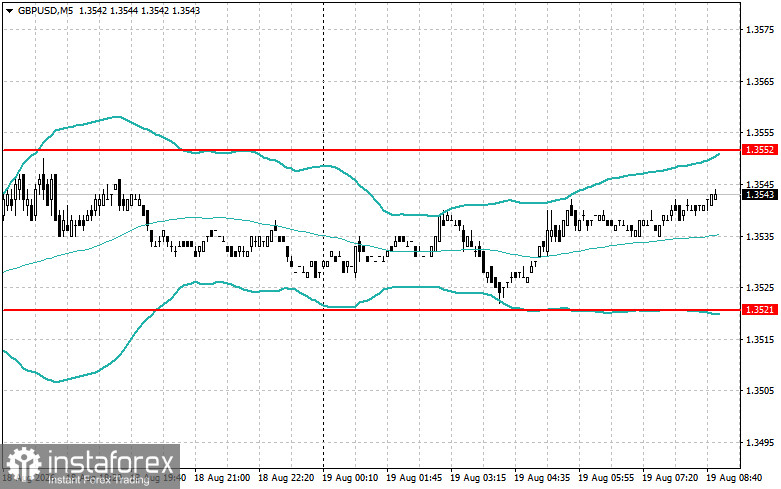
For GBP/USD
- Look for shorts after a failed breakout above 1.3552, returning below this level.
- Look for longs after a failed breakout below 1.3521, returning to this level.
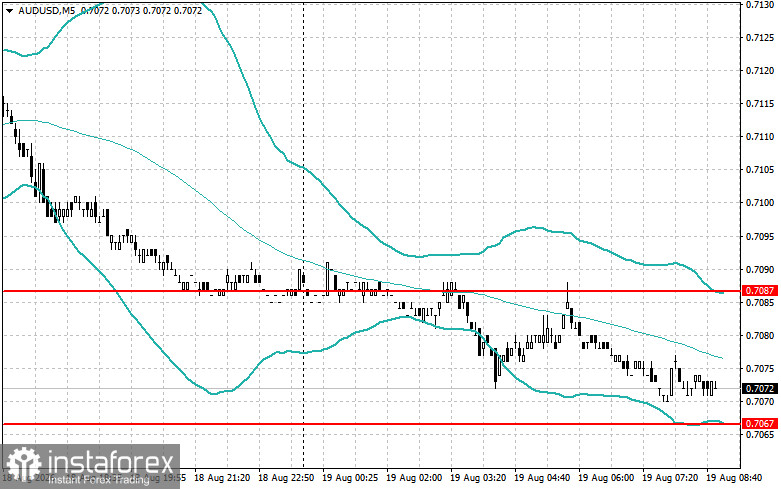
For AUD/USD
- Look for shorts after a failed breakout above 0.7078, returning below this level.
- Look for longs after a failed breakout below 0.7067, returning to this level.
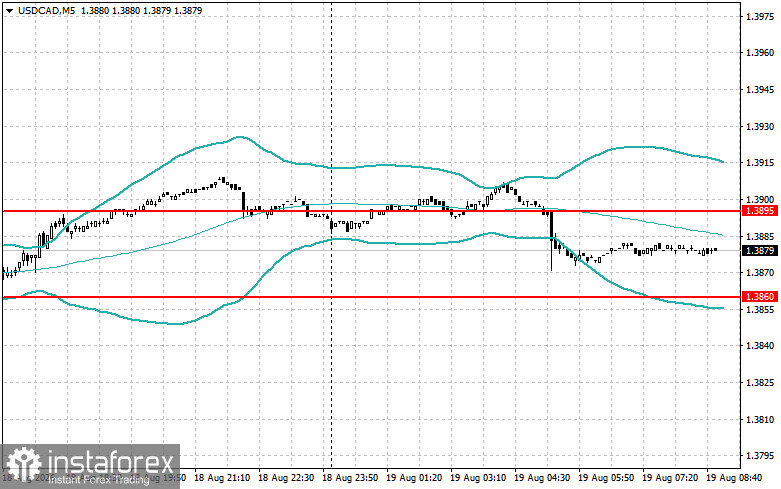
For USD/CAD
- Look for shorts after a failed breakout above 1.3895, returning below this level.
- Look for longs after a failed breakout below 1.3860, returning to this level.