 English
 Русский
 Bahasa Indonesia
 Bahasa Malay
 ไทย
ไทย Español
 Deutsch
 Български
 Français
 Tiếng Việt
 中文
中文 বাংলা
বাংলা हिन्दी
 Čeština
 Українська
 Română


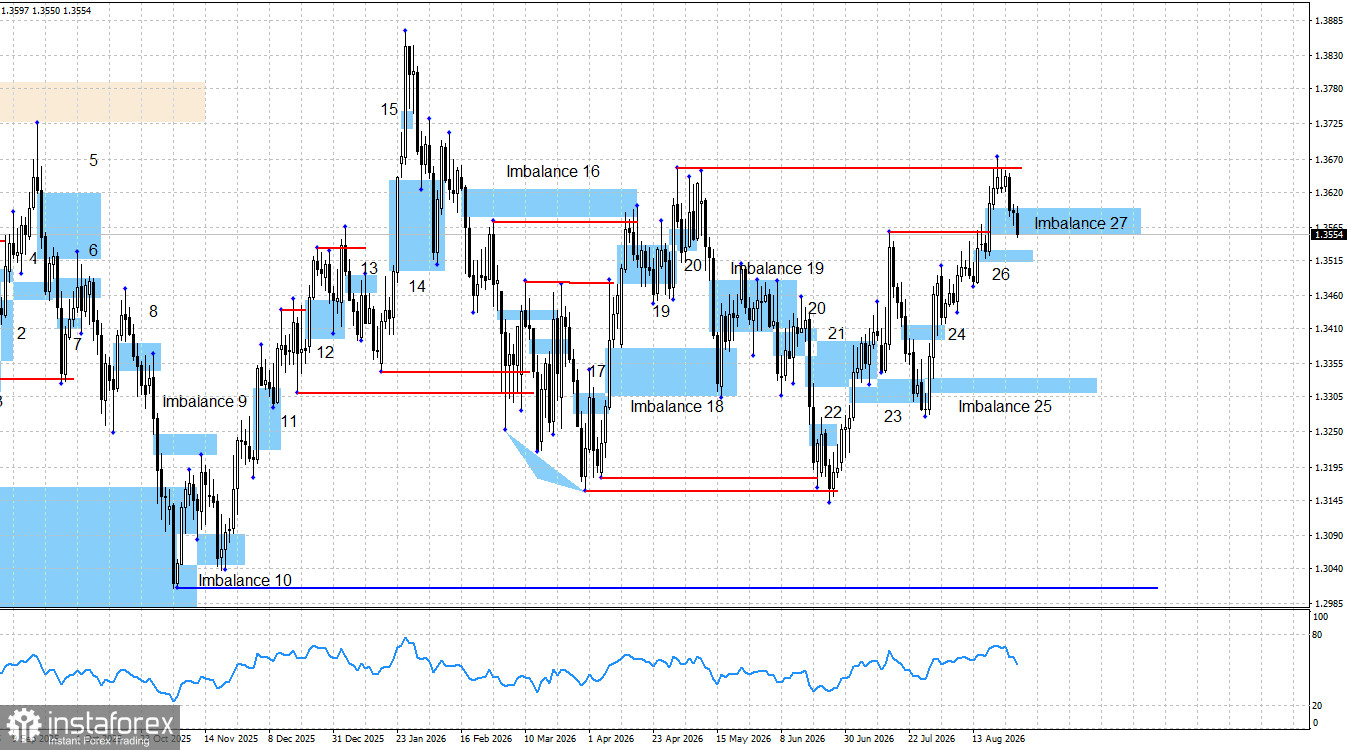
The GBP/USD pair continues to decline on Friday, although a rise would have been more logical. After liquidity was taken from the latest swing, the pound entered the latest bullish imbalance, 27, which has not yet been invalidated. If the price reacts to this pattern, another fourth buy signal will be formed within the current bullish impulse. If this pattern is invalidated, bears could start targeting a more significant move than 100 points. The annual revision of the Nonfarm Payrolls data cannot be considered favorable for the dollar, as the revised figure was negative. Nevertheless, it must be acknowledged that many traders had expected a much more pessimistic figure. Today, we only need to find out what Kevin Warsh will say and what the Fed's stance will be in the coming months. In my view, the dollar remains at risk.
I would like to remind you that in recent weeks the dollar has faced numerous negative factors, including the U.S. Treasury's decision to increase the volume of long-term bond buybacks, weak monthly Nonfarm Payrolls reports, a slowdown in CPI growth, slower GDP growth, and a decline in market expectations for Fed monetary policy tightening. Therefore, if the dollar's decline continues from current levels, it would not be surprising.
Do bears have any prospects at present? In my view, no. A buy signal was formed last week, giving traders an opportunity to open new long positions, which are already showing a profit of around 100 points. Since June 24, the British pound has formed three buy signals and also provided an early warning of an expected markup (liquidity sweeps). The bears currently have no patterns or signals. At this point, they can only rely on the invalidation of imbalance 27, which would allow them to continue their attacks. However, today's Nonfarm Payrolls report does not provide particularly strong support for the bears, while what Kevin Warsh will say at the Jackson Hole symposium remains unknown.
As I have already mentioned, geopolitics is no longer having a positive impact on the dollar, as negotiations between the United States and Iran have effectively stalled. This is a significant setback for the dollar. Officially, Tehran is negotiating only with Oman. It remains unclear what these negotiations will lead to in terms of ending the conflict and reopening the Strait of Hormuz. Iran may be able to agree with Oman on terms for controlling the Strait of Hormuz, but how would this resolve the conflict with the United States and end the U.S. blockade of the strait? Meanwhile, Donald Trump has decided to impose a second blockade on Iran—a financial one. At the same time, he plans to impose sanctions on all countries that support Iran. A new global conflict may be approaching, which at best could take the form of a trade or sanctions conflict.
This week, oil fell to $90 per barrel, but in my view, it will return above $100 in the near future. Information emerged that Donald Trump could lift the economic blockade of Iran if Tehran agrees to lift its blockade of the Strait of Hormuz, which prompted oil prices to move lower. However, I still regard this information as merely an unconfirmed media report.
The chart analysis shows a new bullish advance. Traders currently have three bullish imbalances (25, 26, and 27), within which buy positions can be considered. Naturally, the main focus should be on the latest and closest imbalance to the current price—27. The liquidity sweep of the May 1 high triggered a corrective pullback, and this pullback could extend even below imbalance 27. However, an imbalance is not only an area of interest but also a support zone for the price.
The economic news background affected traders' sentiment on Friday only during the last couple of hours. And it did so in a way that no one expected. The total number of jobs created in the Payrolls report was lower than previously published, but the dollar strengthened because traders had expected much more negative results. However, negative news remains negative. I do not currently expect a strong rise in the U.S. currency.
The overall news background remains such that, in the long term, I cannot expect anything other than a decline in the U.S. currency. The war between Iran and the United States has not changed this. Geopolitical developments prompted the market to reconsider the dollar's safe-haven status for several months, but the conflict has already passed its active phase. The chances of FOMC monetary policy tightening have declined significantly in recent weeks, putting pressure on the U.S. currency. Therefore, in my view, any rise in the dollar is temporary and driven by short-term factors. I see no reason for a new bearish advance.
Economic Calendar for the United States and the United Kingdom:
On August 31, the economic calendar contains no significant events. The economic background will have no impact on market sentiment on Monday.
GBP/USD Forecast and Trading Recommendations:
The long-term outlook for the pound remains bullish. After liquidity sweeps of the two latest swings and the formation of a series of buy signals, the bulls continue to advance. I currently see no basis for bearish attacks, as there are no bearish patterns or signals. The liquidity sweep of the May 1 swing pushed the pound slightly lower but did not disrupt the bullish advance. The next step should be the formation of a bullish signal within imbalance 27. Alternatively, the imbalance could be invalidated, allowing the bears to take control.