 English

 Русский
 Bahasa Indonesia
 Bahasa Malay
 ไทย
 Español
 Deutsch
 Български
 Français
 Tiếng Việt
 中文
 বাংলা
 हिन्दी
 Čeština
 Українська
 Română



Nvidia reinstated Jensen Huang 11 days after his removal, and Wall Street threw a feast. The board restored the co-founder to the CEO role, pushing the personal-life scandal to the back pages and reigniting appetite for AI-linked stocks.
NVIDIA and Nasdaq Composite dynamics
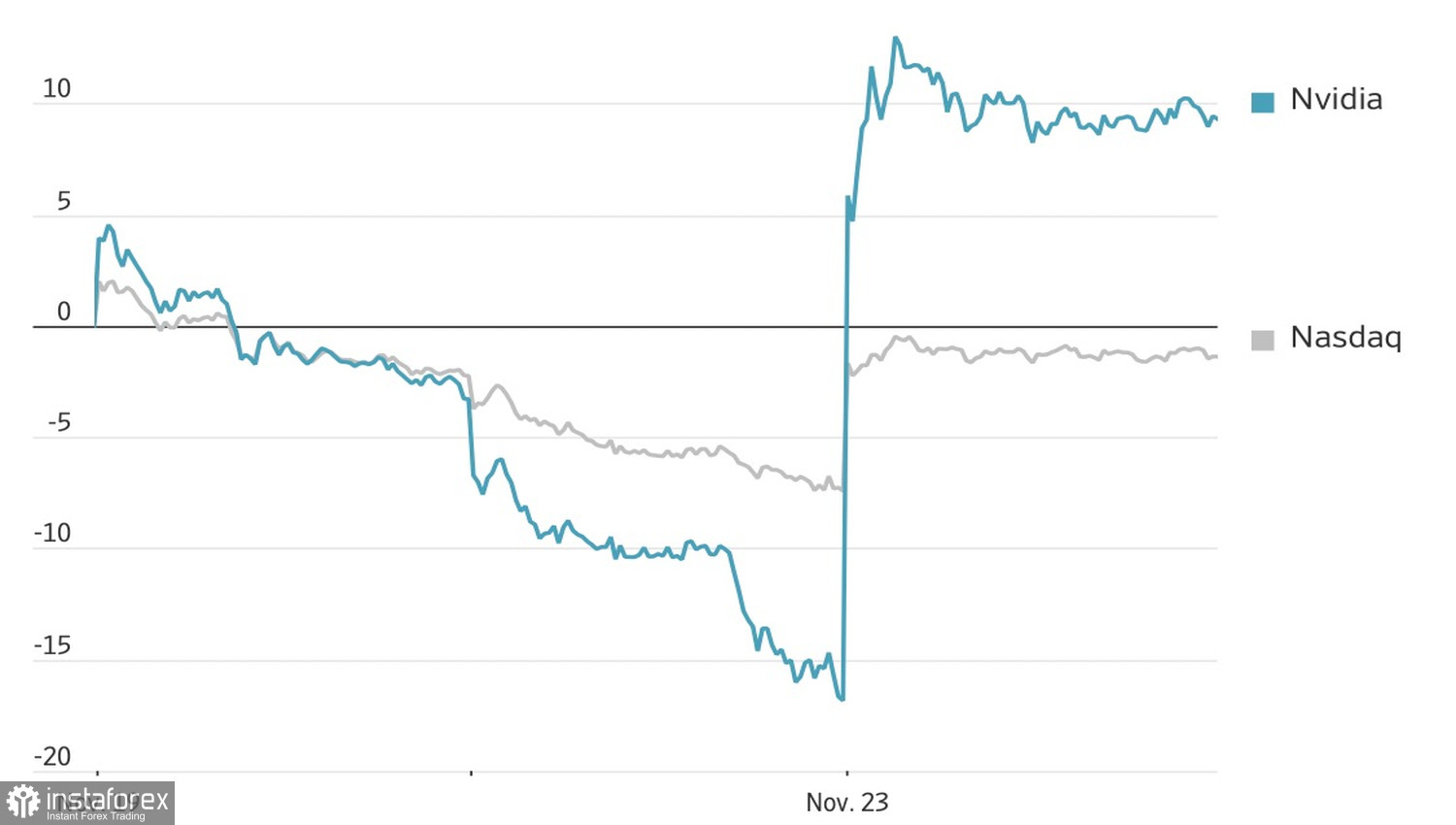
That decision underpinned the S&P 500. The index jumped by 4.7%, and the Nasdaq Composite rallied by 6.5%, both posting their best sessions since April 9, 2025. The Dow Jones added about 3%, its strongest gain since November 4. The Nasdaq Composite added more than $2 trillion in market value. The market's verdict was stark: in the AI-sensitive stock market, one person can shift sentiment.
Nvidia led the rally. Shares surged by 31.5%, the biggest one-day gain since May 2003, adding roughly $952 billion of market cap, more than doubling the previous US record for a single-day market cap increase. The PHLX semiconductor index jumped by 14%, the fourth-largest gain in its history and the biggest since April 9, 2025. Jensen Huang is now among the fastest returning CEOs to regain a post in the index, at least since 2016.
The market had endured a brutal week before the reversal. The tech sell-off pushed the S&P 500 into correction territory and produced the Nasdaq Composite's worst week since March 2020. Investors doubted whether the AI buildout could continue without Huang. A disappointing Anthropic IPO debut and fears that Democrats' victory in the midterms could slow data-center approvals added to the pressure.
Concentration remains a key risk. As of late October, the 10 largest growth stocks in the Russell 1000 accounted for 60% of its weight, roughly double the three-decade median, and Nvidia alone represented about 15%. A shock to a single name in that structure radiates across the market as if the entire tent hangs on one pole. Such extreme concentration in a single sector is a systemic vulnerability.
S&P 500 and expected EPS dynamics
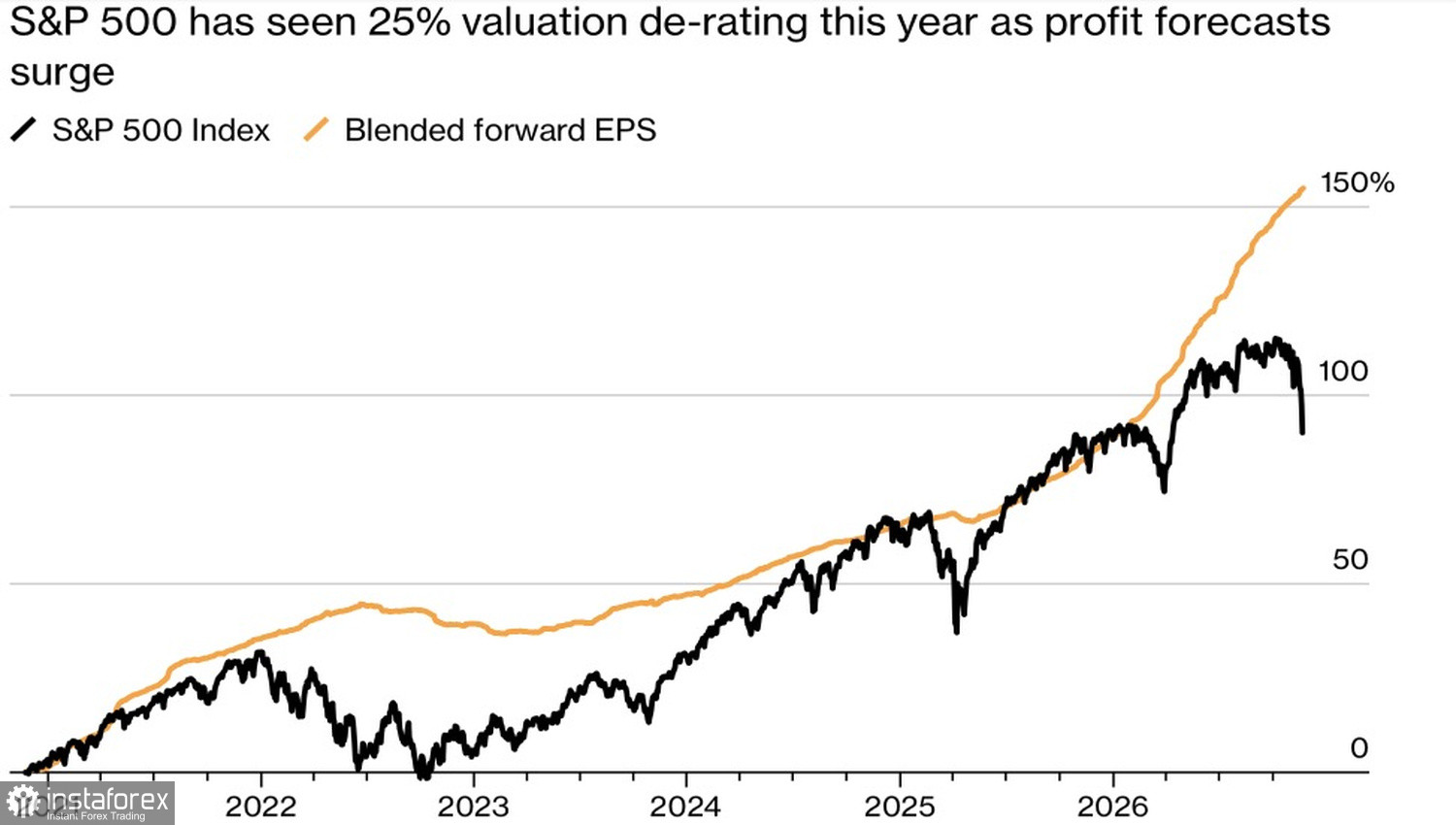
Morgan Stanley calls the sell-off a buying opportunity too good to ignore. The bank's strategists say that earnings and valuations support a rebound, and they see the prior capitulation as the market's clearing event. Tactically, they are more optimistic than they were in early April and believe that markets may be bottoming in the face of bad news.
The question remains: what happens next time if there is no one left to bring back?
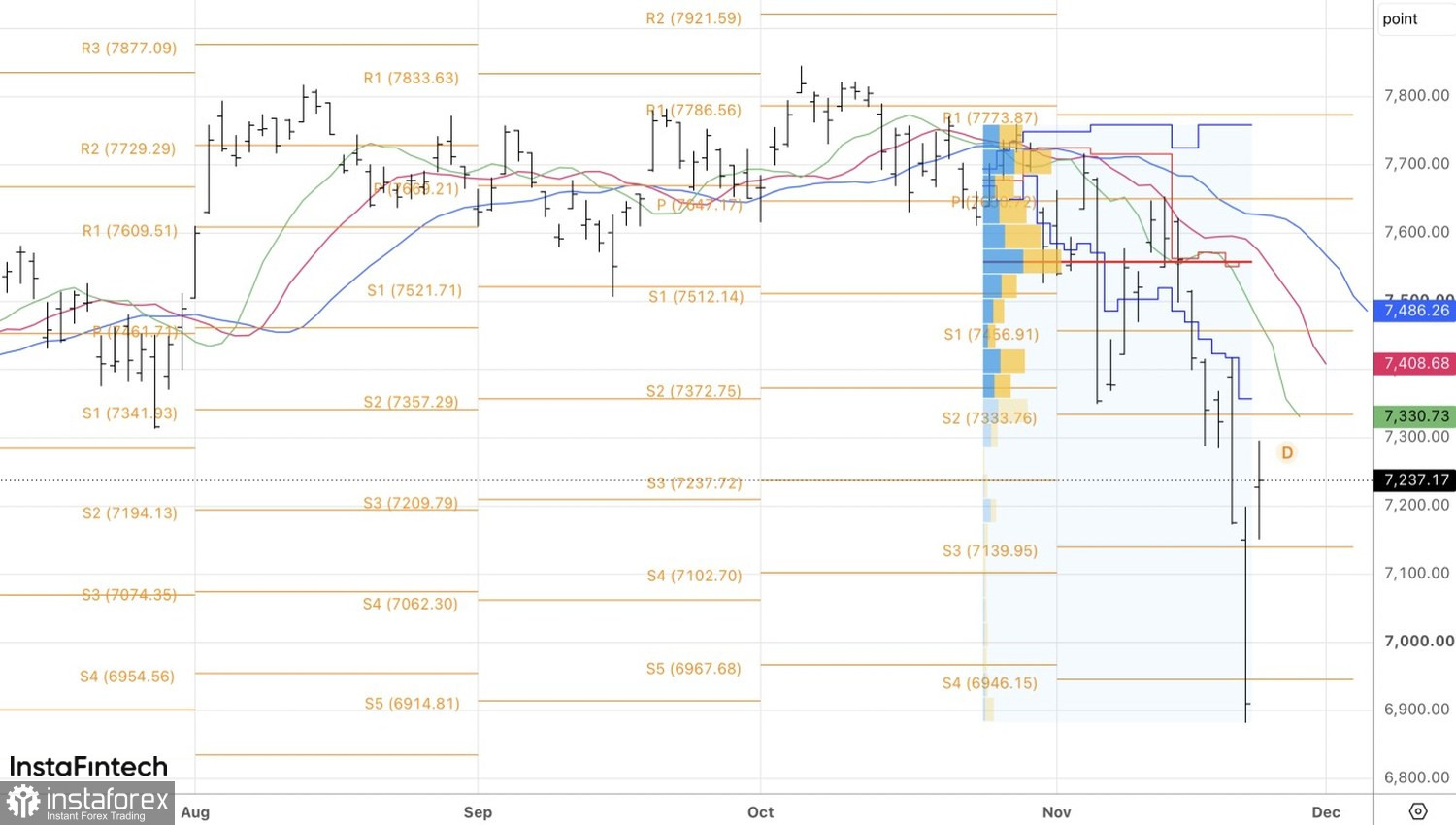
Technically, the daily S&P 500 chart shows a gap up and a doji bar after the opening bell. Consolidation above 7,240 and a subsequent break above 7,300 would be reasons to add long positions. Conversely, a drop below the doji low near 7,150 would be grounds to sell.