 Deutsch
 Русский
 English
 Bahasa Indonesia
 Bahasa Malay
 ไทย
ไทย Español
 Български
 Français
 Tiếng Việt
 中文
中文 বাংলা
বাংলা हिन्दी
 Čeština
 Українська
 Română

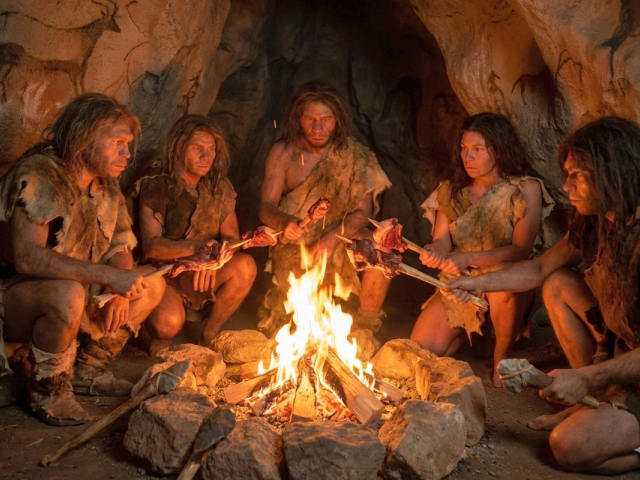
Fire revolution — who keeps pot boiling?
About one million years ago, our ancestors made the most important biological breakthrough. They learned to cook food over fire. Thermal processing became a form of external digestion. Fire broke down tough fibers and greatly reduced chewing time. By gaining a large amount of released energy, humans could afford the metabolic cost of a growing brain. Instead of endless chewing of fiber, our ancestors shifted to social interaction. They effectively brewed their intelligence in pots over primitive fires.
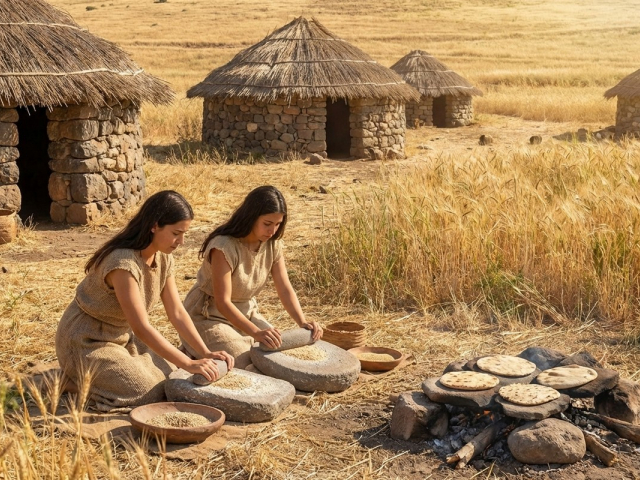
Neolithic revolution — bread as reason to settle
For a long time, scholars assumed farming came first and bread followed. Finds in Jordan changed that view. Archaeologists found the remains of unleavened flatbreads dating back 14,000 years. Natufian hunter‑gatherers made flour products millennia before formal agriculture. The taste of bread and the desire to be near wild wheat fields anchored people to place. A gastronomic discovery prompted settlement and permanently altered the planet’s landscape.
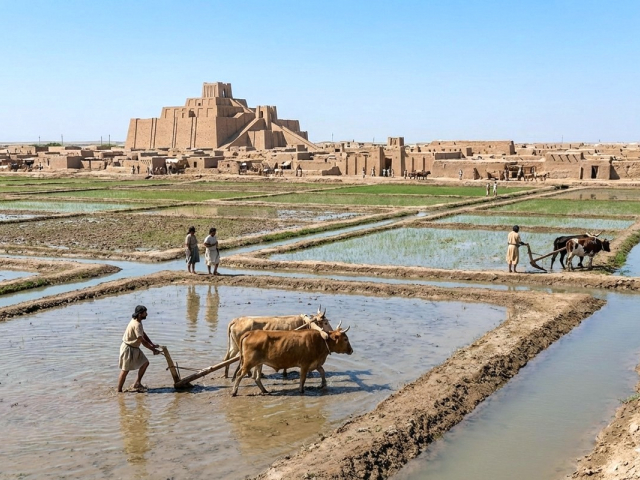
Agrarian Revolution —energy that created empires
When humans fully domesticated plants and animals about 10,000 years ago, history accelerated. The ox and the plow produced food surpluses. Surpluses created the first large‑scale division of labor. Not everyone had to secure food. Warriors, priests, craftsmen, and elites emerged. The need to organize thousands of people produced the first states. People became bound to their fields, trading nomadic freedom for stability and rigid hierarchies that underpinned past empires.
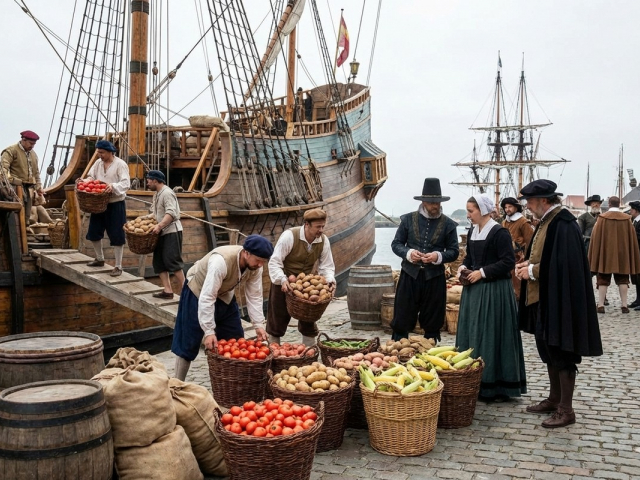
Colonial Revolution — global exchange of genes
In the sixteenth century, the event known as the Columbian Exchange transformed diets worldwide. Plants and animals were carried by humans and ships across the oceans. In ship holds, the globalization of food began. Potatoes, tomatoes, and maize arrived in Europe and made it possible to feed a growing Old World population. In return, the Americas received wheat, horses, sugar, and coffee. This biological exchange reshaped national cuisines and continues to this day.
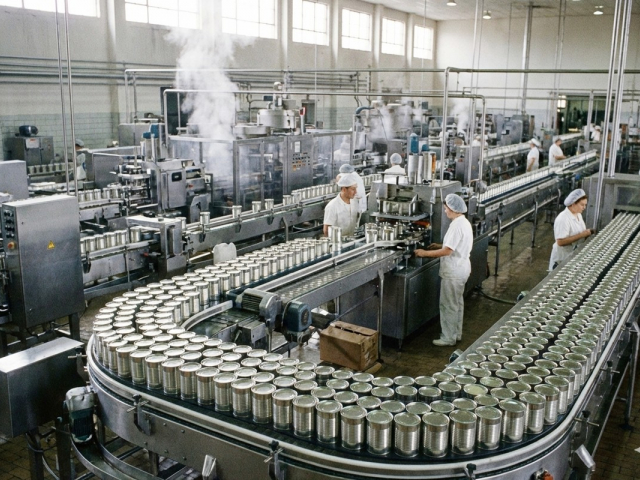
Industrial Revolution — victory over scarcity?
In the twentieth century, food became an industrial product. Mechanization and chemical fertilizers enabled explosive population growth. Agribusiness and large farms handled supplies. Pasteurization and canning allowed perishable goods to travel across oceans. For the first time, humanity largely defeated the fear of famine at scale. This abundance changed human biology: average height and weight increased significantly over the past 100 years.